EUDR for olive wood importers: the dates, the data, and who files what
BY THE ARTISRAW EDITORIAL TEAM · JULY 1, 2026 · UPDATED OCTOBER 6, 2026 · 10 MIN READ
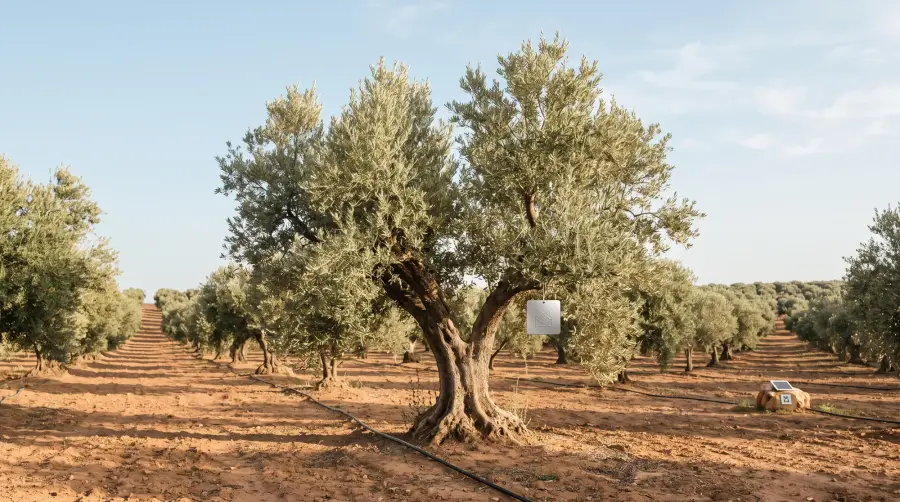
The due-diligence statement is filed in Brussels; the evidence behind it starts in a grove with coordinates.
EUDR applies from 30 December 2026 to large and medium operators and traders, and from 30 June 2027 to other micro and small operators. The due-diligence statement is filed by the EU operator — the importer — not by a supplier outside the EU. And Tunisia is classified by the Commission in the low risk category, which opens the Regulation’s simplified due diligence route: you still collect the information, including plot geolocation, but you do not have to carry out the risk assessment and mitigation stage.
This guide sets out which date applies to whom, what the information set actually contains for olive wood, what we supply and what you file, and the four things worth settling before your next order. It is general information, not legal advice.
Which date applies to you
The Regulation is Regulation (EU) 2023/1115, as amended by Regulation (EU) 2025/2650. Company size is assessed under the EU accounting rules, not by us.
| WHO YOU ARE | APPLIES FROM | WHAT TO DO NOW |
|---|---|---|
| Large and medium operators and traders | 30 December 2026 | Plan the next order on the assumption that the statement is needed; get plot data with the quotation |
| Micro and small operators already subject to the EU Timber Regulation | 30 December 2026 | Same. Being small does not postpone you if EUTR already covered you |
| Other micro and small operators | 30 June 2027 | Use the extra window to get the supplier documentation in place, not to postpone asking for it |
Check your own category, and check each product line’s CN code against Annex I of the Regulation, before you plan shipments around either date.
Tunisia is a low-risk country, and what that changes
For an importer, the practical effect is that the middle stage of due diligence falls away. Under the Regulation’s simplified due diligence route for low-risk sourcing:
- You still collect the information — the full set, including geolocation of the plots, species, quantities, country of production and the evidence of legal harvest.
- You still satisfy yourself about circumvention and mixing — that the material is what it is said to be, and has not been blended with wood of unknown origin somewhere up the chain.
- You do not have to carry out the risk assessment and risk mitigation stage that standard-risk sourcing requires.
- You still file a due-diligence statement. Low risk is not an exemption, and nothing about it removes the statement.
None of that reduces what a supplier has to give you. It reduces what you have to do with it — which is precisely why the quality of the supplier pack is what decides whether the simplified route is actually simple.
What EUDR requires from olive wood shipments
Three things: evidence the wood is deforestation-free and was produced legally, geolocation of the plots where the trees grew, and a due-diligence statement that rests on both.
For olive wood the deforestation-free test is straightforward when sourcing is done properly. The trees are not cleared forest: they are agricultural olive groves, and the wood comes from pruning and from trees at the end of their productive life. In Tunisia that is also a matter of law — felling or uprooting olive trees without authorisation is prohibited under Law No. 61-20 of 1961, as amended — so the wood is a by-product of grove management rather than a reason to clear anything.
The part that takes preparation is the geolocation. A grove is a plot with a boundary, and the information system expects coordinates, not a region.
Who files the statement, and what ArtisRaw supplies
The due-diligence statement is the responsibility of the EU operator placing the goods on the market, which for olive wood shipped from Tunisia is normally the importer. ArtisRaw does not file it and cannot file it for you.
| ARTISRAW SUPPLIES, ON REQUEST | YOU DO |
|---|---|
| GPS plot coordinates for the groves in each batch, in the GeoJSON format the EU information system accepts | Register as an operator and file the due-diligence statement in the information system |
| Harvest dates and forestry licence references for the reclaimed trees | Check each product line’s CN code against Annex I, so the statement covers every line in scope |
| Species declaration (Olea europaea) and volume reconciliation per shipment | Confirm which application date your company falls under, under the EU accounting rules |
| A supplier information pack your compliance team can use when preparing the statement | Satisfy yourself on circumvention and mixing, and keep the documentation at least five years |
Ask for it with your quotation so it is ready before the goods ship. Details of our certifications sit on the quality and certifications page, and the sourcing itself is described in our story and in the Chemlali guide.
A four-step checklist before your next order
- Confirm which application date applies to your company, your EORI registration, and your access to the EU information system.
- Ask your supplier for plot geolocation before you commit, not at shipping time. Without it you cannot complete the due-diligence statement, and the goods cannot be placed on the EU market.
- Check the CN code of every product line against Annex I, so the statement covers each line that is in scope.
- Keep the due-diligence documentation for at least five years. Competent authorities can check past shipments.
The upside for buyers
EUDR is a filter. Suppliers who cannot document their trees will find the EU market harder to serve, and buyers will favour those who can. Buyers who lock in a documented source now — whether for boards, utensils or a private-label programme — can be ready before their application date rather than after it.
If you also sell into the United States, the same evidence chain answers a different form: what a Lacey Act declaration asks for →. And when you plan the shipment itself, the cost is driven by volume rather than weight: the landed-cost arithmetic →
Frequently asked questions
Does EUDR apply to olive wood from Tunisia?
Yes, where the product line falls under Annex I of the Regulation — wood and wooden articles are in scope, and olive wood kitchenware is a wooden article. What changes by country is not whether the Regulation applies but how much work your due diligence has to do: the European Commission classifies Tunisia in the low risk category, which opens the simplified due diligence route for material sourced there.
What does Tunisia being a low-risk country change for me?
It removes a step, not the obligation. Under the Regulation’s simplified due diligence route for low-risk sourcing, an operator still collects the full information set — including geolocation of the plots — and still has to satisfy itself there is no risk of circumvention or of mixing with material of unknown origin. What it does not have to carry out is the risk assessment and risk mitigation stage. You still file a due-diligence statement.
Which EUDR application date applies to my company?
Large and medium operators and traders, and micro and small operators that were already subject to the EU Timber Regulation, are covered from 30 December 2026. Other micro and small operators comply from 30 June 2027. Company size is assessed under the EU accounting rules, not by your supplier, so check your own category — and check every product line’s CN code against Annex I — before planning shipments around either date.
Who files the due-diligence statement, the supplier or the importer?
The EU operator placing the goods on the market files it, which for olive wood shipped from Tunisia is normally the importer. ArtisRaw does not file it and cannot file it for you: a non-EU manufacturer is not an operator under the Regulation. What we supply is the traceability information your statement relies on, and we supply it before the goods ship rather than after.
What geolocation data does EUDR require for olive wood?
Coordinates for the plots of land where the trees grew, precise enough to identify them, which for groves means polygons rather than a single point for anything above the smallest plot size. We provide GPS plot coordinates for the groves in each batch in the GeoJSON format the EU information system accepts, with harvest dates and the forestry licence reference for the trees in that batch.
Is olive wood deforestation-free if the trees were cut down?
Olive groves are agricultural land, not forest, and in Tunisia felling or uprooting an olive tree without authorisation is prohibited by law. The wood comes from pruning and from trees at the end of their fruiting life that are being replaced as part of grove management — so the deforestation-free test is straightforward here. The part that takes preparation is not the argument, it is the paperwork: plot coordinates, harvest dates and licence references, per batch.
How long do I have to keep the EUDR documentation?
At least five years. Competent authorities can check past shipments, and the due-diligence statement you filed is only as good as the evidence behind it, so keep the supplier information pack, the plot coordinates and the licence references with the statement rather than in a separate inbox.
Sources
- Regulation (EU) 2023/1115 on deforestation-free products, as amended by Regulation (EU) 2025/2650 — scope, Annex I, the information and due-diligence obligations, the simplified route for low-risk sourcing, and the application dates.
- European Commission. EUDR country classification list — Tunisia, low risk category. green-forum.ec.europa.eu. Accessed October 2026.
- Commission Implementing Regulation (EU) 2025/1093 of 22 May 2025, establishing the country benchmarking classification. EUR-Lex
- Republic of Tunisia. Law No. 61-20 of 31 May 1961 prohibiting the felling and uprooting of olive trees, as amended by Law No. 2001-119. ECOLEX record
About ArtisRaw. ArtisRaw (STE ART IS RAW) manufactures handmade Chemlali olive wood kitchenware, tableware and décor in Sfax, Tunisia, for retailers, distributors, hospitality groups and private-label brands. Its quality management system is certified ISO 9001:2015 by Bureau Veritas, certificate n° 45.2025.0143, valid November 2025 to November 2028. Route Saltnia Km 4.5, Sfax, Tunisia.
Sourcing for the EU market? Ask for EUDR traceability documentation with your ArtisRaw quotation.
Request a wholesale quote